Jean2 brought another question to the table that I get quite often:
"Your children are interested in learning and thriving. What would you do if they were not?"
First, I could sugar-coat my answer and say that my kids are unique. But they're not...at least, I believe, not in that way. Let me take you back to the days when I taught preschool. I taught the 3yr olds who had never gone to any kind of school before. They came in at the beginning of the year with all their zillions of "why" questions. We'd start on a topic and they'd be off on tangents. But as a teacher (especially one who'd never even begun to think about homeschooling much less unschooling), I did what every teacher needs to do...I reigned them in. I taught them to sit down, be quiet, raise their hands to ask questions. I taught them to focus on the subject at hand and not get far off the beaten path. I had to; I couldn't afford to have 15 kids going in 15 directions if I wanted *anyone* to learn anything that day. I did my job well. By the end of the year, they were walking in lines, waiting to hear what we were going to learn next, staying on topic, giving me the expected answers, etc. But the biggest difference was that the "why's" were gone.
[Insert your version of the views and opinions expressed here are not necessarily the opinions and views of all unschoolers]
and
[Insert "I'm really not trying to dog teachers and school systems - this is just my honest answer to your question"]
I believe that when we take kids who are just beginning to want to connect the dots in life and move from one topic to the next freely and stick them in a classroom and tell them what they'll be learning when...yeah, after a couple years, they (on the whole) won't be as curious as they were. In high school and college - which classes did you do the best in? Which ones did you do extra learning or assignments just because they were fun? Probably your electives. You had the choice to choose what to learn and it probably came much more easily to you because you wanted to learn it.
Again, I'm not trying to dog anyone here. I understand that if you're one adult in a classroom of 30 kids, you *must* keep order and stay on topic (and therefore, have a schedule of 'things we need to learn' i.e. curricula). I get that. But my opinion is that school-at-home isn't necessary for homeschoolers. Why would I take a system that works for a 1:30 ratio and apply it here? I have the ability to reach and spread myself a LOT more with only a 1:4 ratio. Imagine if all schooled classes only had 4 kids in it. I imagine you'd do many many things differently.
I often wonder about the homeschooling movement...if the majority are doing school-at-home, what's the big draw? Are they just wanting to add their religious teachings to core subjects? Are they trying to protect their kids from influences? I guess I'd had to ask some school-at-homers that one. But for me, homeschooling is about helping my kids enjoy learning the way they learn best. Do my kids ever learn from worksheets? Sure. Rose loves worksheets. I do actually have curriculum books lying around here that she picks up and works her way through. Matthew doesn't like them. But what's wrong with exploring a period in history through a Renaissance Festival or a Civil War Reenactment or Wishbone episodes? Exploring Mozart because you found out someone else has your favorite meerkat's name? Writing and learning to read just for the plain FUN of it?
(See Rose's latest drawing - she wrote TIGER at the top...because it was fun and she wanted to write it)

Now, why can't I "count that" as learning? Is it not learning because it wasn't in the curricula I have? Is that just playing for a 4yr old? Should I not count her reading Hop on Pop last night (just because she wanted to) as reading time? Where does our afternoon of making paper airplanes fit in? Science, because we discussed gravity and wind currents, or math, because we talked about angles, or reading because we read and followed directions, comparing and contrasting the different models and methods? It's all just learning. The hardest part, I think, is on my end - when I try to separate our learning into categories at the end of the day. Where *DO* I put the afternoon of paper airplanes? LOL
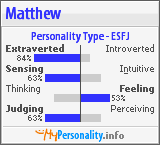
In the end, it's my belief that humans are curious creatures. I bet that after graduation, you found some hobbies that maybe you didn't have time for when you were younger. Though I certainly don't remember having as much homework as I see kids with today so we probably had more time to play an impromptu game of baseball in the yard, or shoot marbles...though both can teach geometry concepts. I'm convinced that if I were to put Matthew in school tomorrow that within 2 weeks, they'd tell me that he has ADD. Hold on - yes, I believe ADD is very real. What I'm trying to say is that because my son has had a lifestyle of freely moving from thought to the next one, school officials would peg him fast of not being able to stay focused. Though I've seen him spend an hour on one of his own Lego creations to get it just right...and I've often seen him read a book for an hour or more...he can definitely focus and he has the memory of an elephant.
Forgive me, my thoughts are a little scattered this morning. But I hope that gives you a frank look into my thoughts on your question. Basically I think that if all kids were given free reign with learning, they'd all be very curious.
I'm curious about everything. Even subjects that don't interest me. - Alex Trebek


.JPG)